How to identify the Asian hornet (Vespa velutina)
The Asian hornet, also called the yellow-legged hornet, is an invasive species established in France and now spreading into the UK. Quick, accurate identification is vital to protect pollinators and prevent false reports that waste resources.
Key features
- Smaller than the European hornet (Vespa crabro), usually 19–24 mm (queens up to 30 mm).
- Dark brown or black body with a broad orange band towards the end of the abdomen.
- Yellow legs (“yellow socks”), giving the alternative name yellow-legged hornet.
- Head black with an orange-yellow face.
- Wings appear brown-tinted rather than clear.
Nests
Asian hornets build large papery nests, often up to 80 cm in size. Nests are usually high in trees, but can also be found in buildings, roof spaces, and hedges. They have a smooth surface and a side entrance hole. Primary nests in spring may start smaller and lower down, but mature nests are usually elevated. Never attempt to approach or remove a nest yourself.
Comparison with similar species
This chart shows how the Asian hornet compares in size and colour to the European hornet, common wasp and honey bee.
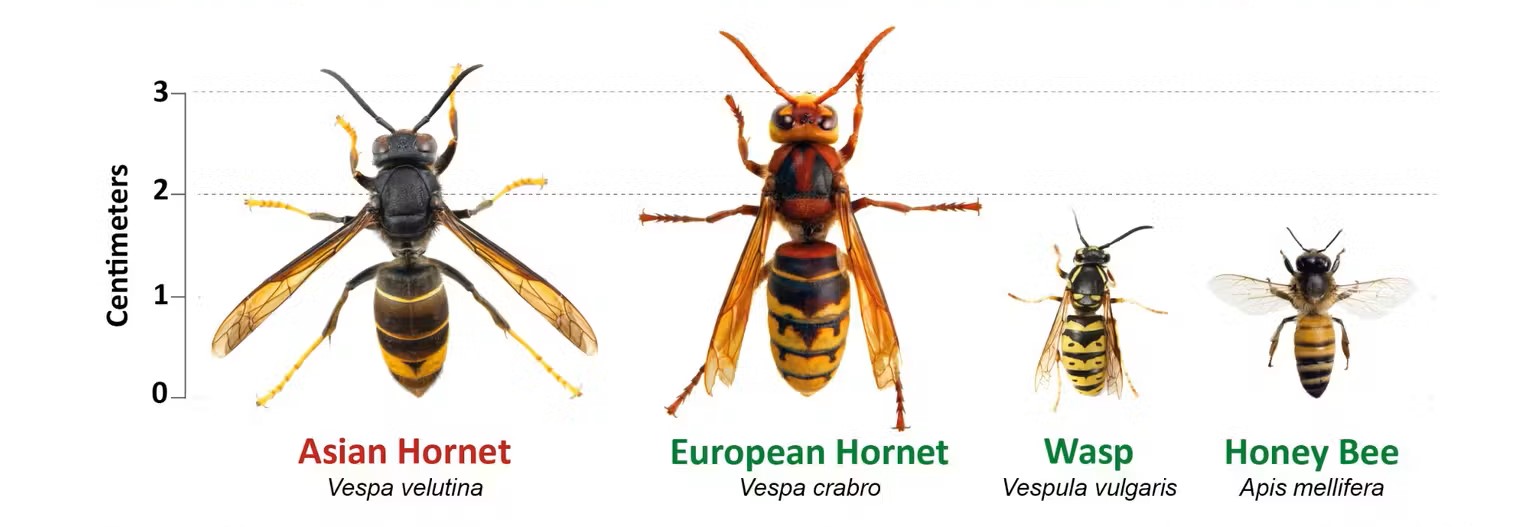
Image courtesy the Animal and Plant Health Agency (APHA), © Crown copyright. Reused under the Open Government Licence v3.0.
Confusion species
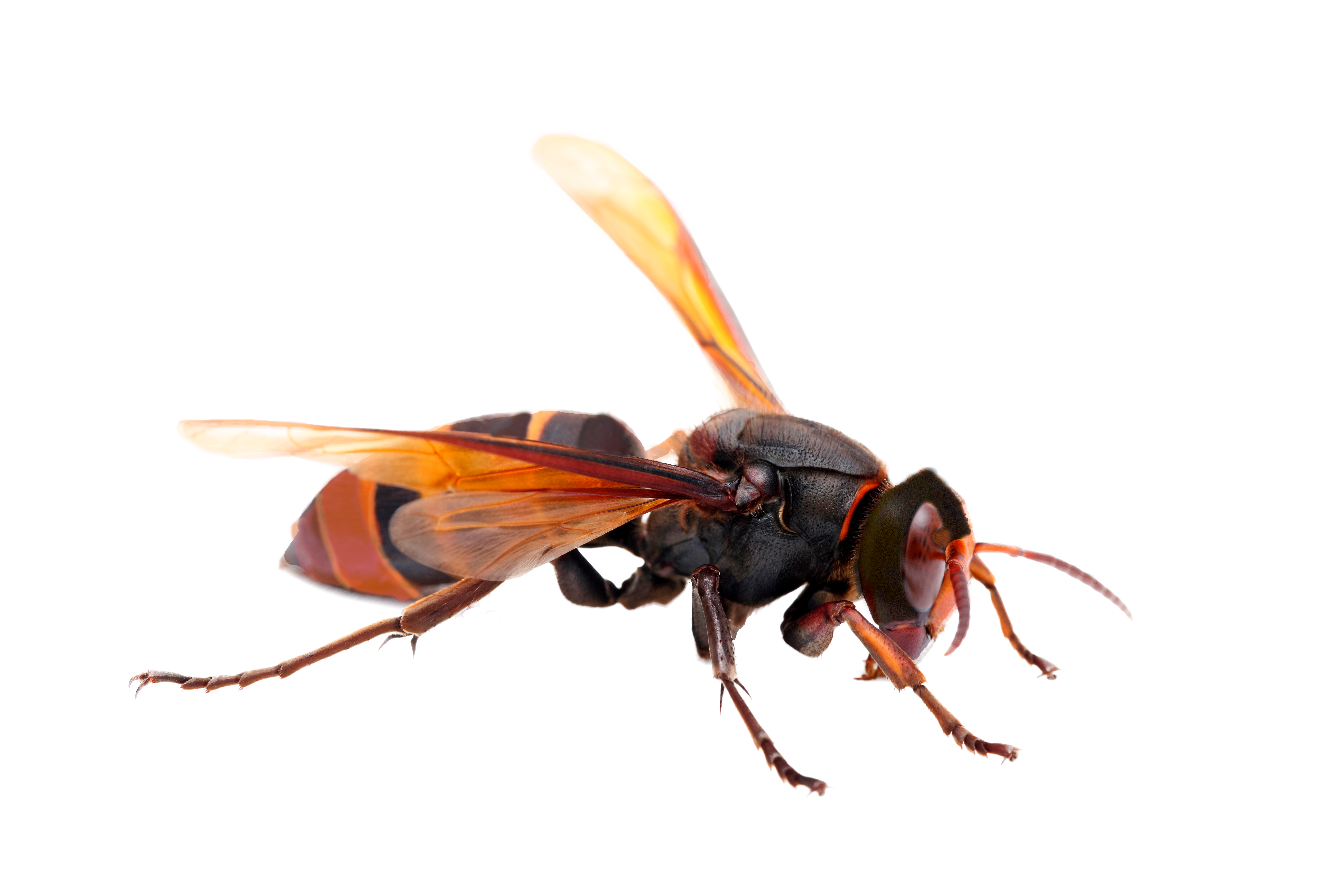
Asian hornet – dark body, orange band, yellow legs.

European hornet – larger, more yellow, reddish thorax.
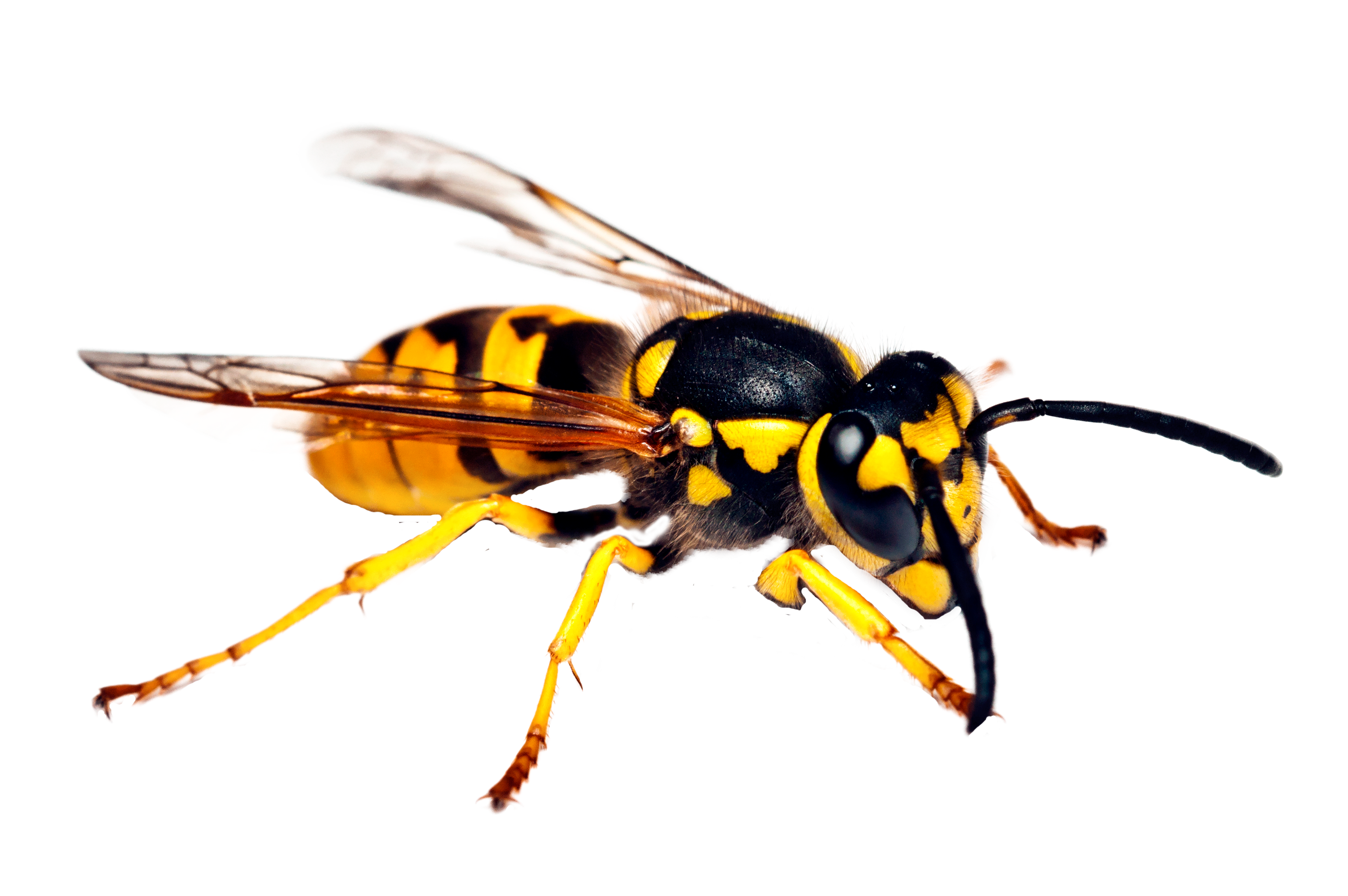
Common wasp – smaller, striped yellow/black, thin waist.
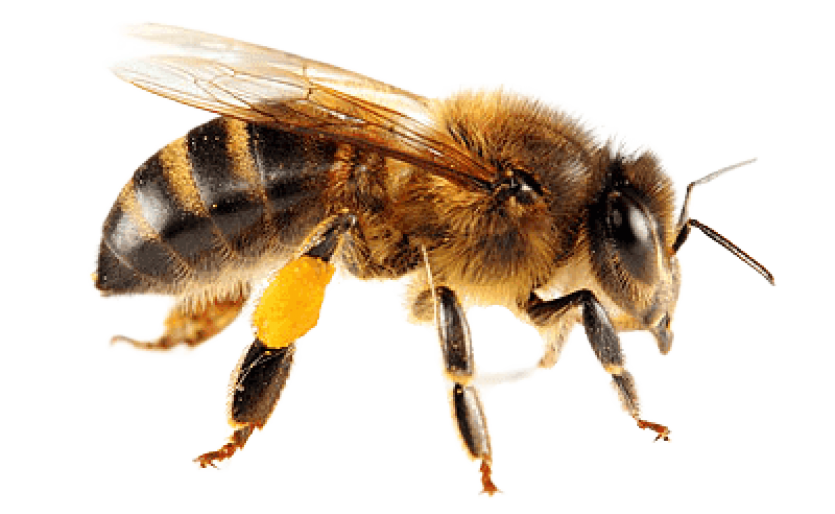
Honey bee – smaller, furry, golden-brown, carries pollen baskets.
Comparison table
| Species | Size | Colour features | Key giveaway |
|---|---|---|---|
| Asian hornet | 19–24 mm (queen up to 30 mm) | Dark body, orange band, yellow legs | “Yellow socks” |
| European hornet | Up to 35 mm | More yellow, reddish thorax | Larger, native |
| Common wasp | 10–15 mm | Bright yellow/black stripes | Much smaller |
| Honey bee | 10–12 mm | Brown/golden, hairy | Fuzzy, pollen baskets |
- For a more comprehensive comparison table, download this pdf .
Reporting a sighting
- In France: Asian hornets are well established so reporting is not required but you can send in details to the community site Le Frelon .
- In the UK: use the Asian Hornet Watch app .
If stung
Hornets and wasps usually do not leave a sting behind. Move away, wash the area with soap and water, and apply a cold pack. Seek urgent medical help if stung in the mouth or throat, if you receive multiple stings, or if any allergic reaction occurs.
Content and images adapted from the National Bee Unit / Animal and Plant Health Agency (APHA), © Crown copyright, used under the Open Government Licence v3.0.